
And why his words are so often abused today
Few biblical voices echo as loudly through Christian history as Apostle Paul (Pavel)—yet few have been so consistently distorted. When religious gatekeepers need scriptural ammunition, Paul’s words become their weapon of choice: “See how Paul denounced the pagans,” they insist. “Look how Paul dismissed other faiths,” they argue. “Notice how Paul established Christianity’s exclusive claim to reason,” they declare.
But this distorted caricature bears little resemblance to the historical Paul. Let me restore the apostle to his actual context—the bustling Mediterranean world of the first century, with its complex social hierarchies, philosophical traditions, and religious pluralism.
Did Paul ever meet Celts or Slavs?
Paul’s travels took him through the eastern Mediterranean:
- Asia Minor (modern Turkey)
- Greece
- Rome
So did Paul ever encounter these northern peoples? The historical record offers a clear answer: no. While his travels through Galatia brought him to lands with Celtic heritage, these communities had already transformed through centuries of Greek influence—they were urbanized, Hellenized, and spoke Greek, not Celtic dialects. Search Paul’s writings for references to druids, Celtic deities, or their sacred practices, and you’ll find nothing.
The Slavic peoples present an even clearer case—they wouldn’t migrate into the Balkans until centuries after Paul’s death. When Paul addresses “pagans” in his letters, he speaks to the Mediterranean religious world he knew, not to northern European traditions that would later be labeled “pagan.” Using his words against these cultures represents historical anachronism, not faithful interpretation.
Then, who were the “pagans” Paul actually encountered?
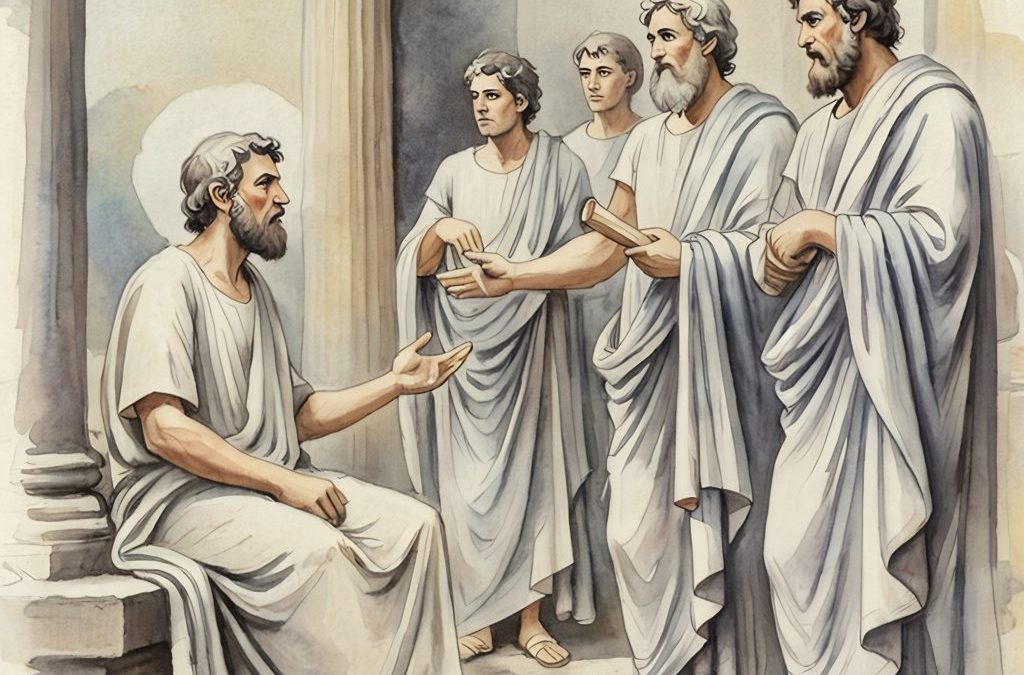
Paul encountered real people, not stereotypes. His “pagans” were sophisticated thinkers and devout practitioners: philosophers debating in the agora, Roman officials maintaining civic order, devotees making offerings at temples to Zeus and Athena, initiates of Eleusinian mysteries seeking transcendence, and Stoics contemplating cosmic reason. When Paul stood on the Areopagus in Athens, he acknowledged their spiritual depth: “Athenians, I see how extremely religious you are in every way” (Acts 17:22). This wasn’t sarcasm but genuine recognition. He even validated their wisdom by quoting their own poet Aratus: “For in him we live and move and have our being” (Acts 17:28).
Why did Paul travel, and what was his mission?
Paul sought not to erase cultures but to expand belonging. His revolutionary message—that Gentiles could enter the covenant without adopting Jewish practices—upended the established order. This radical inclusion threatened Jewish boundary-keepers, destabilized pagan hierarchies, and unsettled Roman authorities who relied on religious divisions to maintain control. When Paul declared,
“There is neither Jew nor Greek… for you are all one” (Galatians 3:28), he wasn’t merely offering theological comfort — he was dismantling the very foundations of ethnic, religious, and imperial supremacy.
What was Paul’s approach to those outside the faith?
Paul engaged minds through rhetoric. He challenged assumptions through dialogue. He built bridges through shared wisdom.
What Paul never did:
Advocate violence against temples
Coerce belief through threats
Seek to eradicate cultural traditions
“I became all things to all people, that I might by all means save some.”
(1 Corinthians 9:22)
That is adaptability—not domination.
Paul opposed idolatry, but he respected the human search for meaning.
Was Paul politically involved to support Jewish dominance?
No. Quite the opposite.
Paul consistently undermined ethnic privilege:
- Lineage did not save
- Law did not elevate
- Identity did not grant superiority
This is precisely why he was dangerous.
Paul did not reinforce power structures—he unsettled them.
What fueled Paul’s revolutionary mission?
Paul’s driving forces were deeply personal and profound:
His Damascus Road experience—a transformative vision that altered his entire worldview
His apocalyptic conviction that time was short and salvation urgent
His belief that spiritual rebirth mattered more than external observances
His radical vision of a community transcending all social boundaries
“The letter kills, but the Spirit gives life.”
(2 Corinthians 3:6)
That line should make anyone cautious about turning his letters into rigid weapons.
Was Paul against pagan beliefs in general?
Paul opposed systems that enslaved conscience, not cultures.
He challenged:
- Deified political power
- Religion used for control
- Ritual without ethical transformation
But he respected philosophy and moral reasoning:
“Test everything; hold fast to what is good.”
(1 Thessalonians 5:21)
That is not intolerance.
What landed Paul in chains?
Not hatred of pagans—but defiance of authority. Roman officials dragged him to prison cells while local power brokers applauded. His crimes? Creating public disturbances that threatened the status quo. Preaching loyalty to a kingdom beyond Caesar’s reach. Building communities where conscience outranked imperial demands. The empire didn’t fear Paul’s theology—it feared his refusal to bow before earthly thrones.
How has Paul become a weapon in modern hands?
Through careful cherry-picking of his words.
Today’s religious gatekeepers:
Extract fragments that serve their agenda
Transform theological disagreement into moral condemnation
Elevate intellectual debate into spiritual warfare
Overlay contemporary culture wars onto ancient letters
The apostle who dismantled barriers now builds walls—a profound irony.
The gravest betrayal of Paul’s message
Perhaps most damaging is this reversal:
Wielding his words to establish hierarchies of spiritual worth.
Paul himself demolished such thinking:
“If I have all faith… but do not have love, I am nothing.”(1 Corinthians 13:2)
Nothing at all.